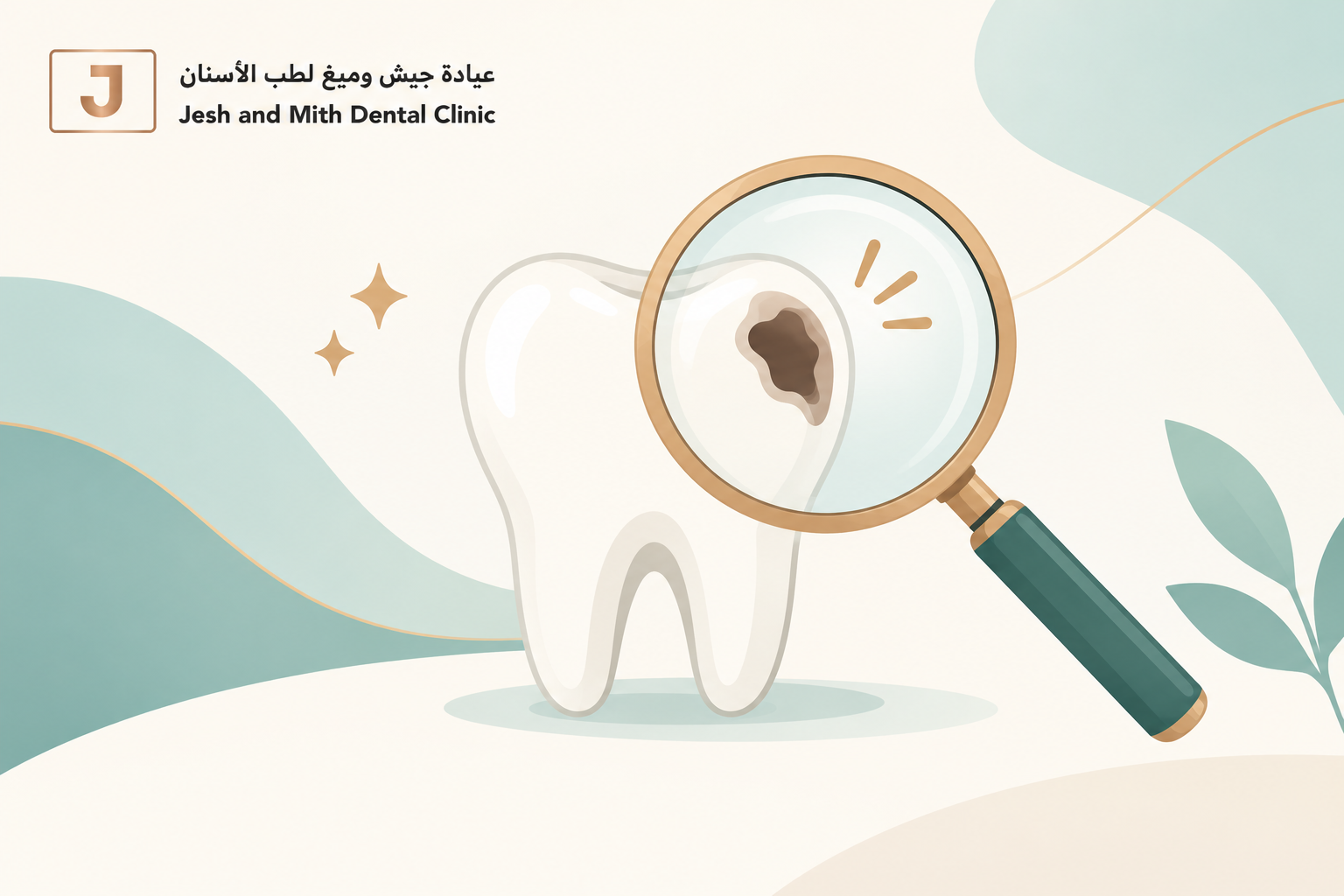
Cavity in a Milk Tooth: Should You Treat It or Let It Fall Out?
You have spotted a dark spot on your child's back tooth and you are wondering whether it is worth treating a tooth that is going to fall out anyway. It is one of the most common questions parents ask us, and the answer is more clear cut than most people expect.
The short answer
Yes, a cavity in a milk tooth should be treated. Not because the tooth itself is permanent, but because of what an untreated cavity does to everything around it.
 Why milk teeth matter more than parents think
Milk teeth hold the space for the adult teeth coming through underneath. Lose one early to decay and the neighbouring teeth drift into the gap, leaving the adult tooth without room to come through straight. That is one of the most common reasons a child ends up needing braces later.
Milk teeth also shape how a child chews and speaks, and an infected milk tooth can damage the permanent tooth still forming in the gum beneath it. The enamel on milk teeth is thinner than on adult teeth, so decay moves through them faster than most parents expect, sometimes in a matter of months.
How long before a cavity becomes a problem?
There is no fixed timeline, but the pattern is consistent. A small cavity is a quick filling. Left alone, it reaches the nerve, and then your child needs a pulpectomy or an extraction, usually at the point where it has started hurting. Toothache in children tends to announce itself at night, and by then the simple option has passed.
If the tooth is genuinely about to fall out
There is one exception. If the tooth is already loose and the adult tooth is visibly on its way, treating it may not be worth it. That is a judgement a dentist makes after looking at the tooth and, if needed, an X-ray showing the adult tooth's position. It is not a judgement to make by looking in the bathroom mirror, because the back teeth that decay most are the ones that stay in place the longest, often until age ten to twelve.
What treatment looks like for a child
A children's filling is quick and comfortable. We numb the area, remove the decay, place a tooth coloured filling, and your child is usually out of the chair within half an hour. There is no silver, nothing visible, and nothing frightening. Where a tooth cannot be saved, a milk tooth extraction is gentle and the area is fully numbed first.
Stopping the next one
Fluoride treatment strengthens the enamel and is one of the most effective things you can do for a cavity prone child. Alongside it, brushing twice daily with a fluoride toothpaste, cutting back on juice and sugary snacks, and a checkup every six months will catch the next cavity while it is still a five minute fix.
FAQ
Does a cavity in a milk tooth need to be filled?
In most cases, yes. An untreated cavity can cause pain and infection, can damage the adult tooth forming underneath, and losing a milk tooth early can leave the adult tooth without room to come through straight.
What happens if you do not treat a cavity in a baby tooth?
The decay continues to spread and eventually reaches the nerve, causing pain and infection. At that point the treatment needed is a pulpectomy or an extraction rather than a simple filling.
Do milk tooth fillings hurt?
No. We numb the area first, so your child feels no pain. A children's filling is usually finished within half an hour and uses a tooth coloured material, so nothing is visible.
At what age do milk teeth fall out?
Front milk teeth usually start falling out around age six, but the back molars, which are the teeth that decay most often, often stay in place until age ten to twelve. That is a long time to leave a cavity untreated.
How can I prevent cavities in my child's teeth?
Brush twice daily with a fluoride toothpaste, limit sugary drinks and snacks, start flossing when two teeth touch, and bring your child for a checkup every six months. Fluoride treatment at the clinic gives cavity prone children extra protection.